
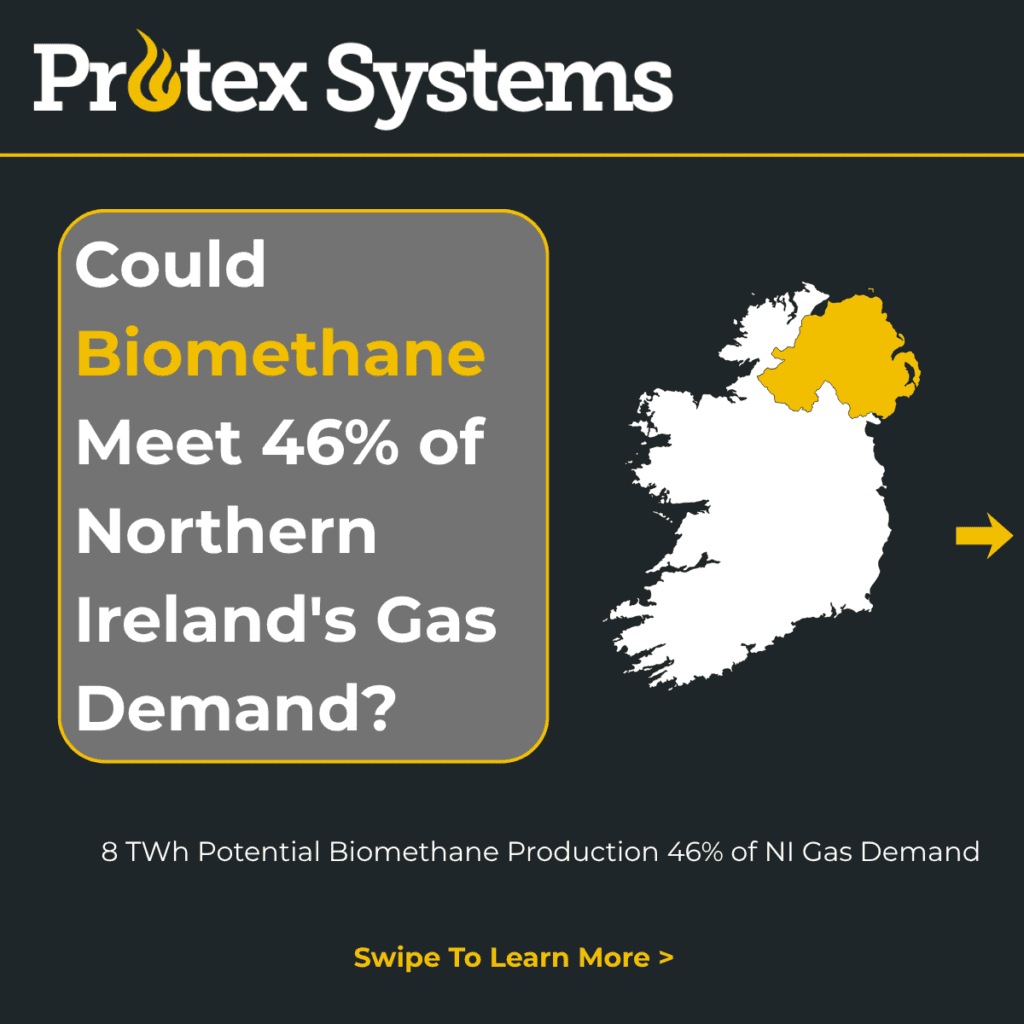
A report from the Green Gas Taskforce found that Northern Ireland has enough sustainable feedstock to generate 8 TWh of biomethane a year. That is almost half of the region’s economy-wide gas demand and more than 100 per cent of the demand from homes and businesses. The report was launched at the ADBA conference in Belfast.
For a region that has barely started producing biomethane, that is a significant figure. This article looks at what biogas and biomethane are, why Northern Ireland is well placed to produce them, what is holding the sector back, and the safety questions that come with building it out.
What is the difference between biogas and biomethane?
The difference is purity. Raw biogas from anaerobic digestion is roughly 50-70% methane, 25-45% carbon dioxide, and a small share of other components including water, oxygen, nitrogen, ammonia and hydrogen sulphide. That raw gas is typically used locally.
Biomethane is biogas that has been processed so it can go into the gas grid. First, cleaning removes trace components such as hydrogen sulphide, water vapour and siloxanes. Then upgrading enriches the methane content and adjusts the calorific value so the gas can be injected into the existing grid and used interchangeably with natural gas. For grid injection, methane content is typically raised to 95-98%.
Why Northern Ireland is well placed
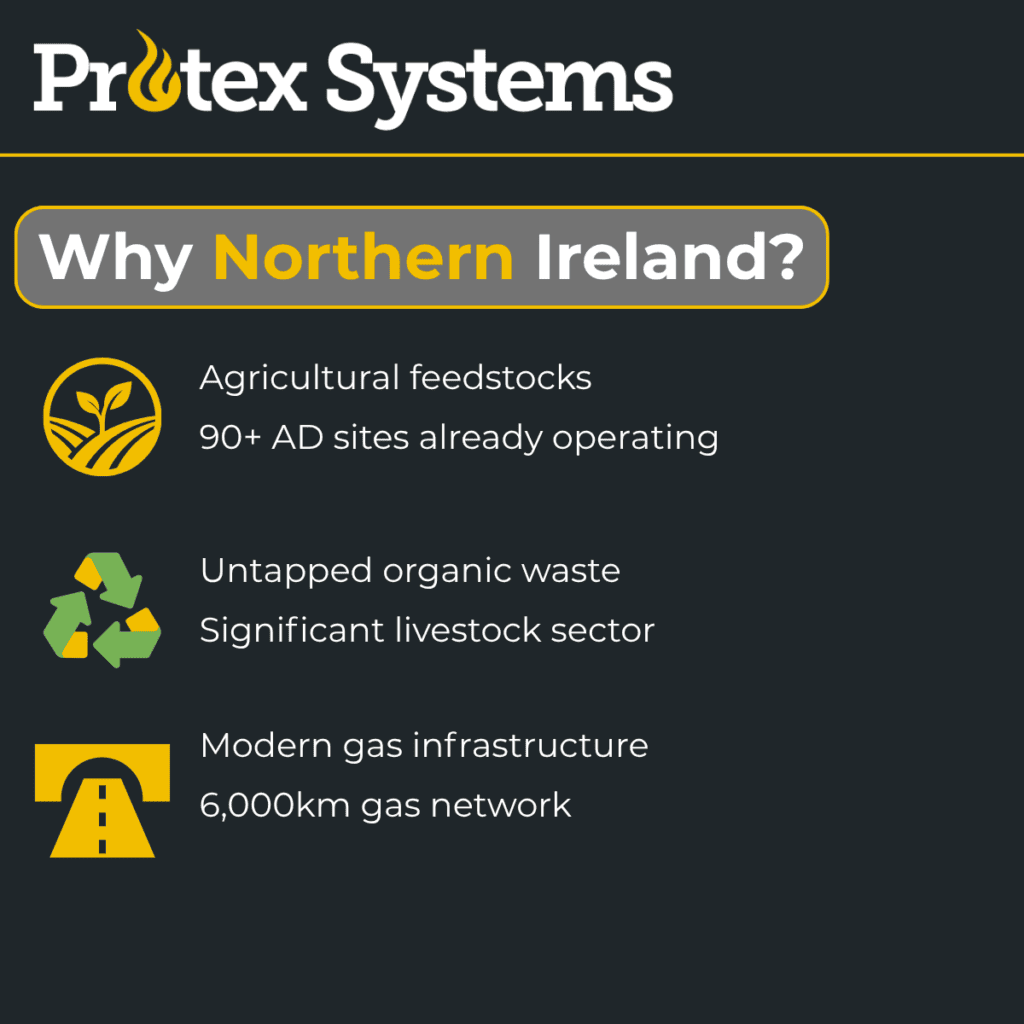
A large agricultural feedstock. The report identifies livestock waste as one of the largest potential sources of supply, with agriculture, which employs around 50,000 people, central to feedstock. Only around 2.5% of organic farm waste is currently used for anaerobic digestion. The process also produces digestate, which can be turned into bio-based fertilisers and partly replace imported mineral fertilisers.
A gas network that is ready. The network is already technically capable of handling up to 100% biomethane. It extends for more than 6,000 km, and by the end of 2025 about 345,000 properties, roughly 40% of the region’s homes and businesses, were connected. The report also notes it is relatively new compared with networks elsewhere in the UK and Europe, and that biomethane can use existing infrastructure and domestic boilers without changes for consumers.
A real economic prize. The report estimates the sector could create up to 3,000 jobs and around £5 billion in added value by 2050. Separate Taskforce analysis cited in the report found that maximising biomethane across the UK could cut the overall cost of net zero by £174 billion, by using existing gas infrastructure rather than costly new build.
Biomethane and the electricity grid
Biomethane isn’t only a heating fuel. The report identifies a role for it in balancing the electricity grid, providing dispatchable, low-carbon power generation as wind and solar capacity keeps growing.
What needs to happen next
The potential won’t deliver itself. The report stresses that Northern Ireland will not realise its biomethane potential without policy support. The Taskforce is calling for long-term production support, clear biomethane targets and the removal of regulatory barriers.
The safety challenge of scaling up
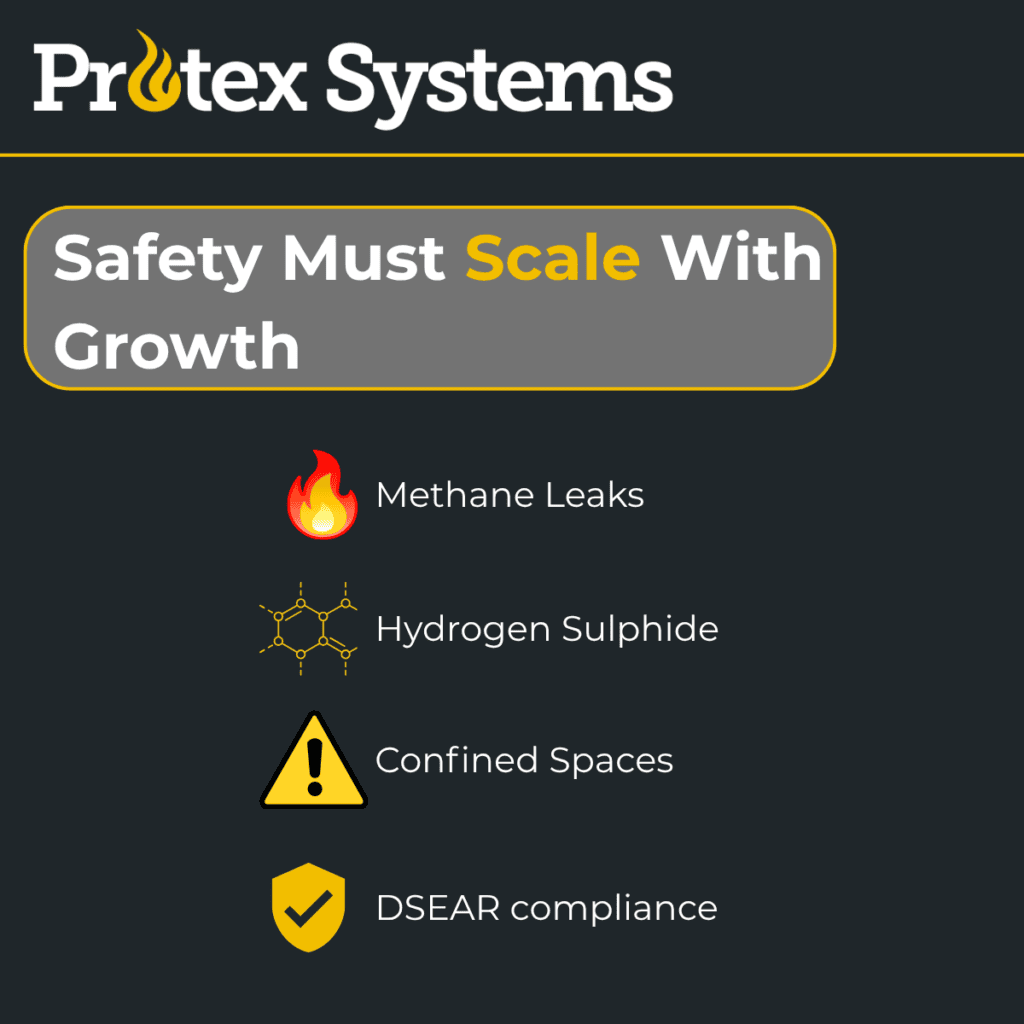
Anaerobic digestion plants process potentially hazardous materials and produce large volumes of methane. As the number of plants grows, so does the importance of designing safety in from the outset. Three hazards stand out.
Fire and explosion. Methane, which makes up around 60% of biogas, forms explosive mixtures in air. DSEAR deals with the risks from fire, explosion and similar events arising from dangerous substances in the workplace, and requires a risk assessment of those risks. The HSE has highlighted two recurring problems at AD plants: poor management of maintenance, particularly hot work such as grinding and welding, and deficiencies in the DSEAR risk assessment. In December 2020, four people died in an explosion at an AD plant in Avonmouth that processed human sewage, and AD plants have been a key HSE focus since.
Hydrogen sulphide. Hydrogen sulphide is a component of biogas, and even low-level exposure can cause loss of consciousness. It is a highly toxic gas that is heavier than air. At dangerous levels it destroys the sense of smell, so there is no odour to warn of its presence. That makes reliable instrumentation essential rather than relying on people to notice it.
Confined spaces. The constituents of biogas, including carbon dioxide, methane and hydrogen sulphide, create the potential for both asphyxiation and fire or explosion in confined spaces. One review of incidents highlights a case where biogas entered a control centre through electrical conduits and was ignited by sparking devices. It recommends upgrading the ATEX zoning classification of technical control rooms and improving ventilation in underground service spaces.
What good practice looks like
Practical controls include a comprehensive HAZOP review during design, DSEAR and ATEX procedures in operation, gas meters and alarms, removal of ignition sources, and a robust permit-to-work system backed by risk assessment. The HSE’s guidance on hazardous area classification and controlling ignition sources, and its guidance on confined spaces, are the starting points for operators. Fixed sensors that detect hazardous gases such as methane (at the lower explosive limit) and hydrogen sulphide are a simple, convenient way to monitor an area’s atmosphere.
Gas detection for biomethane and AD sites
Safety can’t be an afterthought as biomethane production grows. Hazard identification, hazardous area classification and fixed gas detection all need to be planned from the start and maintained throughout the life of the plant.
Protex Systems UK supplies industrial fire and gas detection instrumentation, systems and consultancy for high-hazard sectors, including integrated fire and gas systems and bespoke designs tailored to specific site risks. If you’re developing or operating a biogas or biomethane facility, contact-us to talk through gas detection for your site.

