
As the biogas industry matures, operators are looking for new ways to get more value from their facilities. Biomethane remains the primary objective for most Anaerobic Digestion (AD) plants, but attention is turning to a second product stream: biogenic CO₂.
For years, the carbon dioxide removed during biogas upgrading was treated as waste and vented to atmosphere. Today, demand from Sustainable Aviation Fuel (SAF) producers, food and beverage manufacturers and carbon utilisation projects is turning it into a saleable commodity. But capturing, purifying, compressing and storing CO₂ also brings new operational and safety challenges that need to be designed in from the start.
Key Takeaways
- Biogenic CO₂ recovered during biogas upgrading can become a new revenue stream for AD operators.
- Demand is being driven by SAF, food and beverage, agriculture and industrial applications.
- CO₂ recovery introduces new hazards in compression, storage and transfer.
- CO₂ is an odourless, colourless asphyxiant, so reliable gas detection is essential.
- Safety should be engineered into a CO₂ recovery project from day one, not added later.
What Is Biogenic CO₂?
Biogenic CO₂ is carbon dioxide derived from recently living organic material, such as crops, food waste, agricultural residues and wood.
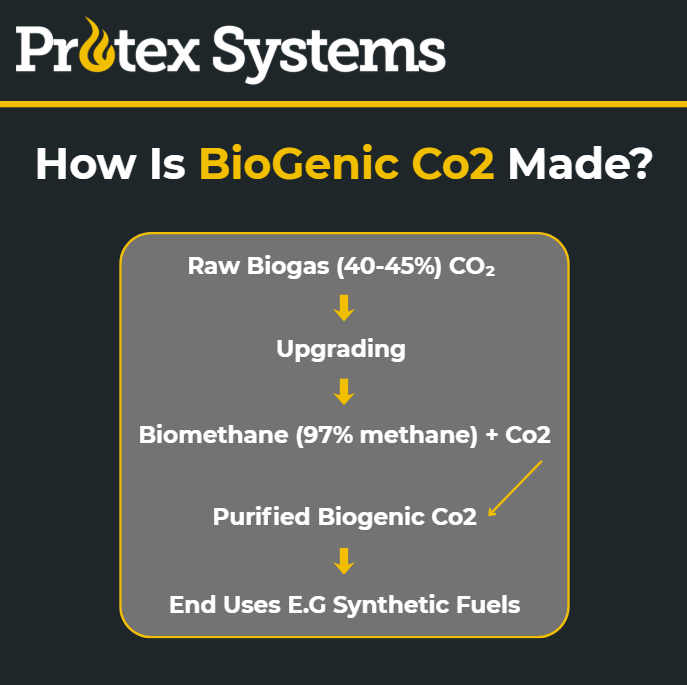
In an AD facility, biogas is produced by the breakdown of organic matter. Raw biogas typically contains methane, carbon dioxide and trace gases, with CO₂ commonly making up around 40-45% of the mix. Before it can be injected into the national gas grid as biomethane, the gas must be upgraded to increase its methane content, typically to 97% or higher depending on the grid entry specification.
During upgrading, CO₂ is separated from the gas stream. Rather than being released, it can be captured, purified and put to use. Common upgrading technologies include:
- Membrane separation
- Water scrubbing
- Chemical (amine) scrubbing
- Pressure Swing Adsorption (PSA)
- Cryogenic upgrading
As these technologies have developed, more operators have recognised the commercial potential of recovering and selling purified biogenic CO₂.
Why Is Demand Growing?
Industries across the economy are looking for sustainable carbon sources to support decarbonisation targets and Net Zero commitments. Biogenic CO₂ is well placed to meet that need.
Sustainable Aviation Fuel (SAF)
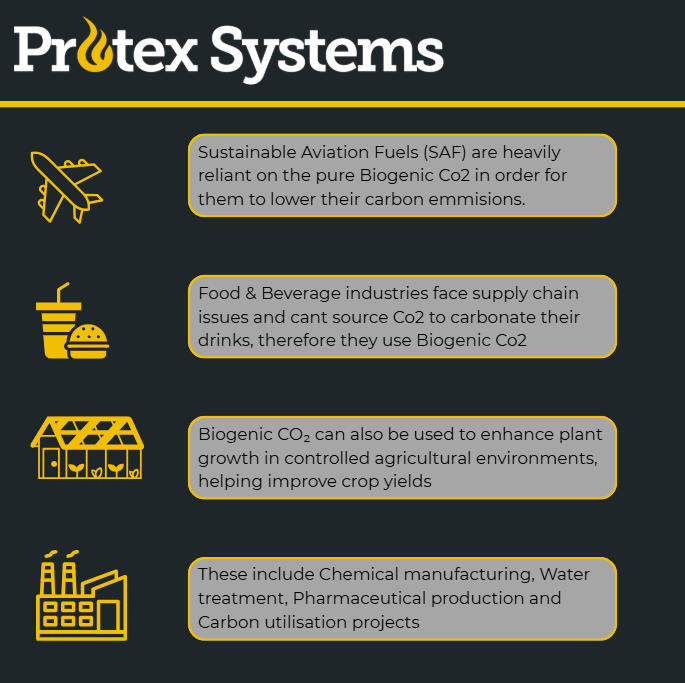
Aviation is one of the hardest sectors to decarbonise. Electric and hydrogen-powered aircraft are in development, but large-scale commercial deployment is still some way off, so SAF is widely seen as one of the most practical routes to cutting aviation emissions in the near and medium term.
Two SAF pathways in particular are creating demand for sustainable carbon:
E-SAF (Power-to-Liquid). This process combines green hydrogen, produced by electrolysis, with captured biogenic CO₂. Through synthesis routes such as Fischer-Tropsch, these inputs are converted into synthetic aviation fuel with significantly lower lifecycle emissions than conventional jet fuel. E-SAF is regarded by many as a scalable long-term solution.
Alcohol-to-Jet (AtJ). This pathway converts renewable alcohols, such as bioethanol, into synthetic kerosene suitable for aviation through a series of chemical processing stages. It sits alongside E-SAF as part of a broader push to build a sustainable fuel supply chain.
As SAF production grows to meet regulatory mandates and industry targets, demand for sustainable carbon feedstocks is expected to grow with it.
Industrial Applications Beyond Aviation
Several established industries already rely heavily on CO₂.
Food and beverage. The sector is a major CO₂ consumer. Purified biogenic CO₂ can be used for:
- Carbonation of soft drinks, beer and sparkling beverages
- Modified Atmosphere Packaging (MAP) to extend shelf life
- Food chilling and freezing
- Food processing and preservation
Supply disruptions in recent years, including the UK CO₂ shortage of 2021, exposed how vulnerable traditional supply sources can be, and increased interest in renewable alternatives from AD sites.
Greenhouse agriculture. CO₂ enrichment can improve crop yields in controlled growing environments while supporting more sustainable production.
Other industrial uses. These include chemical manufacturing, water treatment, pharmaceutical production and carbon utilisation projects.
Commercial Benefits for AD Operators
Recovering biogenic CO₂ can offer operators several advantages:
- Diversified revenue. AD plants have traditionally earned income from electricity, heat and biomethane. CO₂ adds another product stream and reduces reliance on a single source of income.
- Merchant gas sales. Food-grade and industrial-grade CO₂ can be sold into established commercial markets.
- Carbon removal opportunities. As carbon capture technology evolves, some operators may be able to participate in carbon removal or sequestration programmes linked to Bioenergy Carbon Capture and Storage (BECCS).
- Better asset utilisation. Extracting value from an existing process stream makes more of the infrastructure already in place.
- Operational flexibility. If biomethane demand fluctuates, CO₂ recovery and storage can open up alternative routes to revenue.
What New Risks Are Introduced?
The commercial case is compelling, but CO₂ recovery adds hazards that must be properly managed.
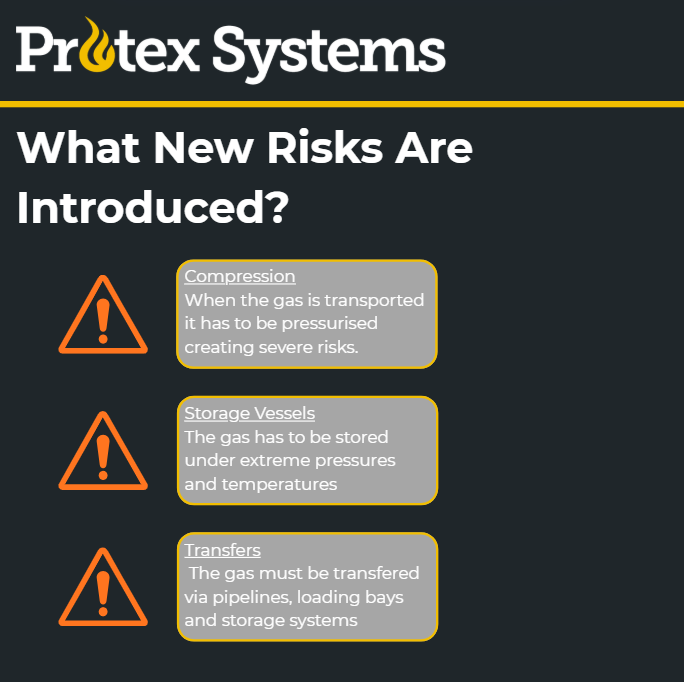
Compression systems. CO₂ usually needs to be compressed for efficient transport and storage. Risks include mechanical seal failures, valve leaks, elevated temperatures and pressure-related equipment failures.
Storage vessels. CO₂ is commonly stored under pressure and, in some applications, at reduced temperatures. Potential hazards include overpressure events, insulation failures, equipment malfunction and uncontrolled releases.
Transfer and loading. CO₂ may move through pipelines, tanker loading bays, ISO containers and bulk storage systems. Leaks during transfer can endanger personnel and equipment, particularly where ventilation is limited.
Fixed gas detection and monitoring can help identify leaks and abnormal conditions early, before they escalate.
Why CO₂ Detection Matters
CO₂ is not flammable, but that does not make it harmless.
Personnel safety
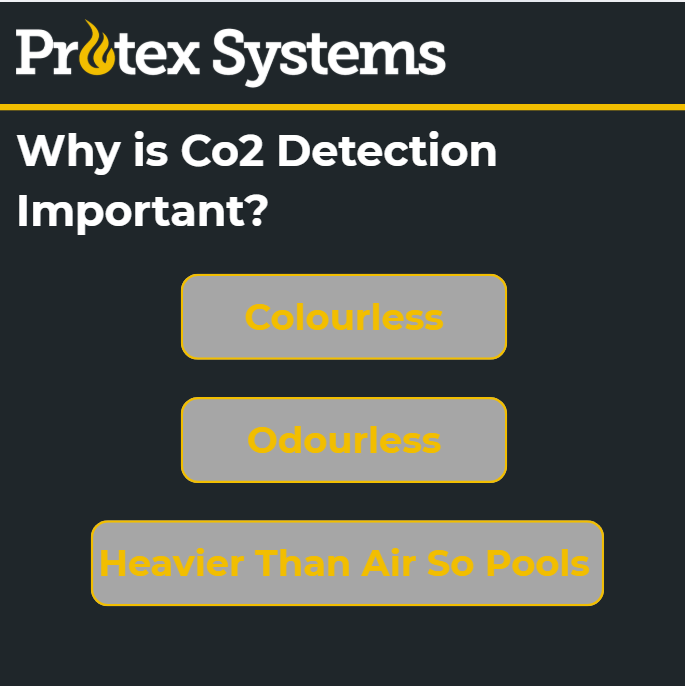
CO₂ is colourless and odourless, so a leak cannot be detected without dedicated instruments. As an asphyxiant, it can displace oxygen and create hazardous atmospheres. Exposure can cause headaches, dizziness, an increased breathing rate and loss of consciousness, and in extreme cases it can be fatal.
Because CO₂ is heavier than air, it can build up in low-lying areas, pits and poorly ventilated spaces, often where people least expect it. In the UK, workplace exposure is controlled under HSE’s EH40 limits, which set long-term and short-term exposure limits for CO₂, and sites handling CO₂ should assess the risk as part of their wider legal duties.
Fixed ambient monitoring provides continuous detection and can trigger audible and visual alarms, ventilation systems and emergency response procedures.
Process efficiency
Gas monitoring also supports plant performance. Biomethane must meet strict quality requirements, so upgrading systems need to run efficiently and consistently. If separation efficiency declines, CO₂ breakthrough can affect gas quality and system performance. Continuous monitoring helps operators spot problems sooner, reducing downtime and helping maintain product specifications.
Designing a Safe CO₂ Recovery Strategy
Safety is far easier and more cost-effective to build into a project at the design stage than to retrofit later. Every site is different, and factors such as plant layout, storage capacity, operating pressures, ventilation, transfer arrangements and personnel access all influence how CO₂ behaves during normal and abnormal operation.
A robust strategy should consider:
- Risk assessments and hazard studies
- Fixed gas detection
- Portable gas detection
- Detector positioning and coverage
- Ventilation requirements
- Emergency response planning
- Ongoing maintenance and calibration
Gas detection is one part of this picture. It works best as part of a broader risk management approach, not as a standalone safeguard.
How Protex Supports Biogas Facilities
At Protex Systems, we work with operators across the biogas and biomethane sectors to develop Fire & Gas detection strategies tailored to each site. Our solutions can include:
- Fixed NDIR CO₂ detection
- Open-path gas detection
- Portable gas monitoring
- Fire & Gas control systems
- Integrated site-wide monitoring
Through site-specific assessment and engineering expertise, we help operators choose the right technologies and the right detector locations for their application.
Planning a CO₂ recovery project, or reviewing the protection on an existing one? Contact our team to arrange a site assessment.
Conclusion
Biogenic CO₂ is rapidly moving from by-product to valuable commodity. Demand from SAF, food and beverage, agriculture and industry is giving AD operators new ways to diversify revenue and improve facility economics.
But capturing, compressing, storing and transporting CO₂ brings process and personnel safety considerations that cannot be overlooked. Effective gas detection, monitoring and risk management help protect people, maintain efficiency and support the long-term success of CO₂ recovery projects.
The most successful facilities will be those that treat biogenic CO₂ not just as a revenue stream, but as a process that deserves the same engineering, operational and safety rigour as every other part of the plant.

